AI Only Helps Strata Managers Who Write Down What They Do
Michael Teys has worked in strata since the 1980s as a lawyer, researcher and operator. He explains which work belongs to machines and why written procedures come first.
With Michael Teys, Founder and Chairman, The Strata Professionals
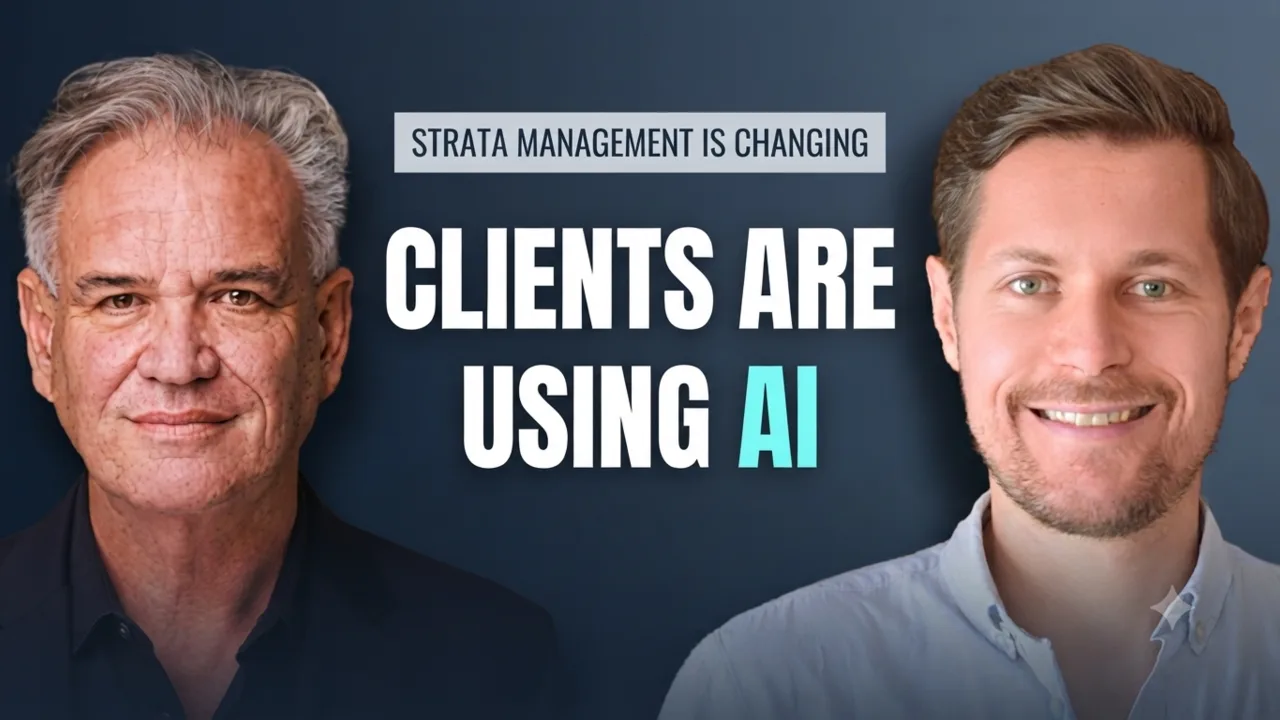
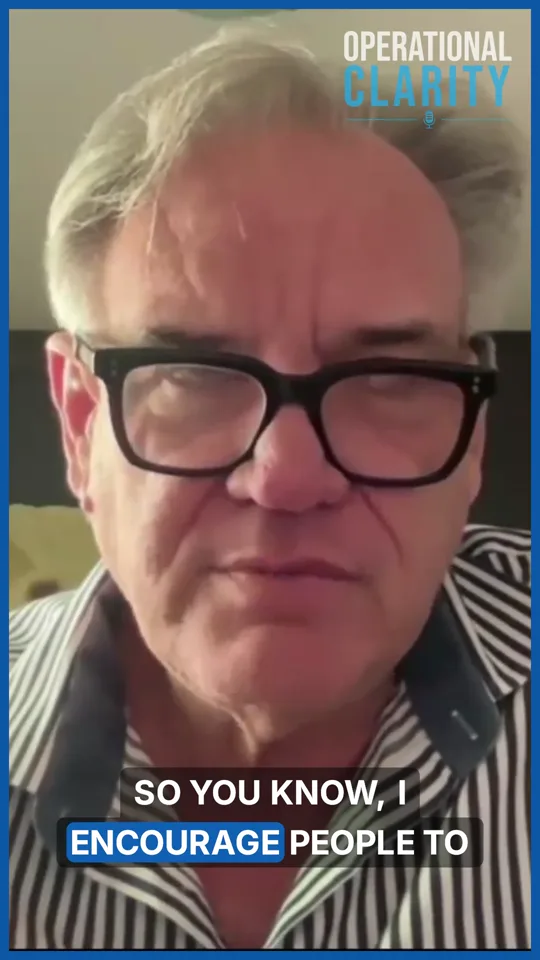
Michael Teys joined me from Sydney. He has worked in strata, the Australian term for jointly owned apartment buildings, since the 1980s: as a lawyer, as the head of a multi-state management business, and now as a researcher and founder of The Strata Professionals. I asked him where AI fits into a strata manager’s work.
The Only Money He Earns Comes from the Client
Michael has lectured in London, Canada and Spain, and he sees the same problem wherever people own a building together. Owners stop trusting their manager. He puts this down to the business model. Insurance commissions and related-party transactions pay the manager out of money the building spends, and the owners don’t see how.
“You see this level of toxicity arising because strata owners don’t understand what strata managers are doing and how they are getting paid for it.”
Michael Teys
So the business he is building takes its fee from the client and nothing else.
“The only money I earn is from you as my client. There’s no insurance commissions, there’s no related party transactions.”
Michael Teys
He applies the same thinking to contracts. Most Australian jurisdictions allow strata management contracts of up to three years. Michael wants clients to be free to leave at any time, without cause and without penalty, and he believes they stay with a manager who is good and who is honest about mistakes.
On commissions, he says the market is already moving. Companies that relied on insurance commission for 20 to 30 percent of their revenue are walking away from it.
A Strata Manager’s Tasks Fall into Four Kinds of Work
I asked Michael which processes he would automate and which should stay with people. He answered with a model he credits to McKinsey, the professional service spectrum. It sorts professional work into four categories: two routine ones, commodity work and procedural work, and two that need experience, gray hair work and rocket science.
In strata, commodity work is a task like updating an owner’s records, which needs consistency and little training. Procedural work needs some training and a system. Gray hair work is defusing a conflict, or facing serious defects that nobody has funded. Rocket science starts when a building reaches the end of its useful life and the owners must redevelop it.
“At the moment I think we’ve got a lot of people, highly paid and highly experienced people, doing commodity work and procedural work that actually now shouldn’t be doing that. That should be done by machines.”
Michael Teys
His operating systems list between 60 and 70 separate tasks that a strata manager does routinely. Once each task sits in one of the four categories, he knows where to use AI. He said openly that the first attempts were frustrating and wasted some money and some time, and that his team is getting better at it.
Strata Clients Already Put Their Papers Through AI
Michael’s message to managers who wait is that their clients have not waited.
“If you’re not using AI, you need to understand that your clients are. So when you send out a bunch of papers to them, they’re putting them through AI.”
Michael Teys
He had a recent example. His company tendered for work and won, and the client told him how the decision was made.
“The client feedback was, we fed five proposals into Claude and Claude said you were the best for these reasons.”
Michael Teys
He understands why many managers still resist. Change is hard for people who built a business, their wealth and their identity on the old ways. He also expects those managers to fall behind.
AI Needs Procedures That Many Companies Never Wrote Down
I asked what had made his own AI projects frustrating. Michael said that he first expected too much of the AI engineers. They knew AI well and knew nothing about strata.
After some wasted money, he stepped back and started with a description of the work itself.
“Unless you can write down in great detail, with great precision, what it is that you are doing, then it’s almost impossible to use AI to its greatest advantage.”
Michael Teys
Few companies have that description ready.
“There are so many strata companies, big strata companies, that actually don’t have written procedures for what they do.”
Michael Teys
As a lawyer and consultant, Michael has watched two managers sit side by side in the same business and run their portfolios with different templates, tools and shortcuts. How the work is done depends on who sits at the desk. Once he can describe or show how a task is done, he says, a good engineer sees quickly how to fix it.
Could Your Team Write Down How It Works?
Michael wrote down his procedures before he got results from AI. The free AI readiness check shows where your team stands today and gives you three next steps, in under 60 seconds.
A Day of Budget Work Now Takes About an Hour
His clearest result so far is a budgeting tool. For a mid-size Australian building, Michael says, it is not unusual for a manager to spend a full day on the budget with a spreadsheet and last year’s figures. The manager also expects pushback on a high levy, the amount each owner pays into the building’s budget, and that pulls the numbers down.
“Machines don’t care about being told that they’re wrong. And they don’t care about being told that they’re unpopular.”
Michael Teys
He tested the tool against a manager he considers probably the best in Sydney. The machine got two years of a building’s accounts and his prompts. It did not get her budget for the coming year.
“I got it to within five percent of hers … within minutes. Now that’s a day’s work solved.”
Michael Teys
He allows about an hour for the manager to adjust the result with their own knowledge of the building. Every line item carries a note on its source, such as where the expected insurance increase or the electricity price came from. For a manager with fifty buildings, he compared the saving to the four weeks of annual leave that Australians get.
Michael called this work the most fun he has had in 40 years. His advice to other managers is to experiment and to be patient, because AI is “not a silver bullet.”
“Those that play with it, learn with it, experiment with it and use it will benefit.”
Michael Teys
The Written Task List Comes Before the AI Tool
The order of Michael’s steps is what I took from this conversation. He listed the tasks, sorted them by how much judgment they need, and wrote down how each one is done. The AI tool came after that, and so did the budget result.
A team like yours can start the same way this week without any software. Pick one recurring task, ask two colleagues to write down how they do it, and compare the two versions. The differences show what you have to settle before a machine can do the work.
Which of Your Team’s Tasks Belong to a Machine?
Michael counts 60 to 70 routine tasks in a strata manager’s work, and he wants machines to do the commodity and procedural ones. Your team has its own list.
The free AI Readiness Check asks a few short questions about how your team works today. You get your readiness level, three next steps and a 30/60/90-day plan by email.
It takes less than 60 seconds.
Michael Teys is Founder and Chairman at The Strata Professionals. Facts and figures are as Michael stated them at the time of recording.

Michael Teys
Founder and Chairman, The Strata Professionals
The Strata Professionals Group is a network of independently owned strata management offices, each run by a local strata manager, with branches in Queensland, the Northern Territory and South Australia.
thestrata.com.au- Location
- Sydney, Australia
- Experience
- In strata since the 1980s
- Law
- Fellow of the Australian College of Strata Law
- Research
- University of New South Wales, starting a doctorate at Oxford
More episodes

Your team could be the next result.
Book 30 minutes. Walk me through the workflow that eats the most time. We'll map it together, and you keep the sketch, whether we work together or not.
Tell me a little about your team.
Not ready to talk? Get your free AI readiness report →