Strata Email Workflows Break at 40 to 50 Buildings per Manager
Nathan Creswell, founder of Strata IQ, came to strata from software product teams. He explains where a manager’s inbox stops working and how a new system earns trust.
With Nathan Creswell, Founder, Strata IQ
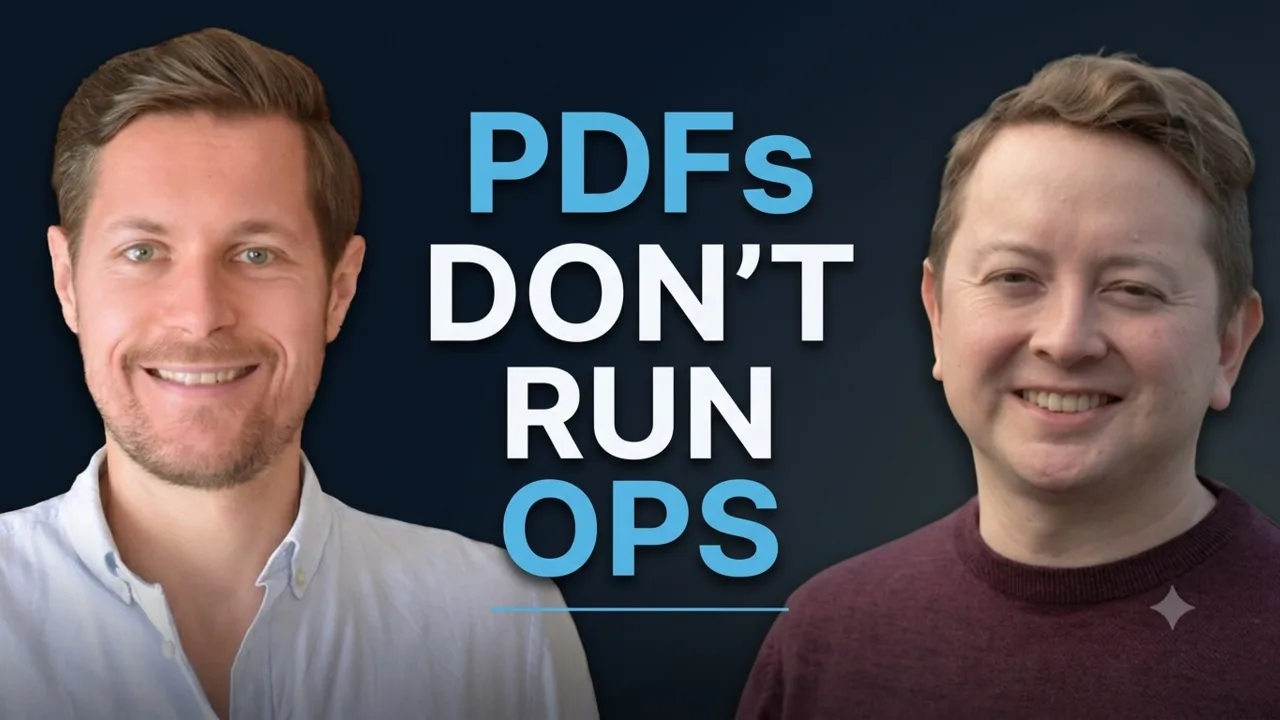
Nathan Creswell led product development at software companies such as Salesforce before he founded Strata IQ, a platform for strata communities in Australia (strata is the Australian word for an HOA). He also owns an apartment in Sydney. I asked him which parts of a strata manager’s day look normal from inside the industry and broken from outside.
Strata Managers Call Their Daily Admin Operational Noise
Nathan came to the problem as an owner. He knew the frustration of emailing a strata manager, getting no answer, following up, and still hearing nothing. Then he interviewed strata managers and found them just as stressed. Many of them, he heard, look after 40 to 50 buildings.
The managers had a name for this load: operational noise. It is the stream of owner inquiries, plus the committee meetings and annual general meetings (AGMs) that every building needs.
“If you can imagine 40 to 50 buildings, just assume that it’s even a mid to small size building, say ten owners … Imagine ten times 40, 50 people, not all at once, but regularly sending you inquiries.”
Nathan Creswell
By Nathan’s estimate, nine times out of ten the answer is already written down, in the building’s bylaws or in the strata legislation. The manager still has to find the document and write the reply.
Nathan pointed to a 2023 report by Macquarie Bank, a major Australian bank. As he recalled it, 78 percent of strata businesses named staff costs as the main reason for falling profit, and about 33 percent of strata managers changed employer in 2022, up from 14 percent in 2018.
Owners, meanwhile, resist higher fees. Nathan, an owner himself, voiced their view.
“Why should I pay my strata manager more when my emails don’t get answered?”
Nathan Creswell
Email Holds Up Until a Manager Has 40 to 50 Buildings
I asked Nathan why strata managers are slow to adopt newer systems. His answer began with people.
“The biggest barrier to technological change is the human, actually. … Humans have a tough time with change, and that’s understandable. I have a tough time with change myself.”
Nathan Creswell
Email is the one tool that every owner can use, so managers build their work around it. One manager told Nathan that when he hires junior strata managers, he has to see that they are efficient with their inbox.
“Whether you’re 72 years of age or 22 years of age, everyone can use email.”
Nathan Creswell
A new strata business can run on email and office software that cost close to nothing. Nathan called that “good enough” for a business that is starting out. The trouble comes with growth.
“It’s when you scale, it’s when you start to have volume, it’s when you start to have 40 to 50 buildings that things start to break. Because no human can deal with that sheer volume of information.”
Nathan Creswell
The workflow that suited the first few buildings becomes “very, very unwieldy” as the business gets bigger. At that point, Nathan said, a manager has to think carefully about the workflow, the systems and the data behind it.
How Many Buildings Can Your Inbox Still Carry?
If your managers answer the same owner questions by email every week, AI may be able to take part of that work. The free AI readiness check shows where to start, in under 60 seconds.
A Routine Quote Request Would Look Broken to a Software Team
I asked Nathan to pick one workflow that feels normal in strata and would look broken to someone from modern software. He described a repair to common property. Someone reports a problem and an email chain starts. The manager requests quotes, which arrive as PDFs, and forwards them to the committee.
Some members reply and most do not. Then a meeting is held. Six months later, someone asks why that contractor was chosen and whether anyone got other bids, and the whole process starts again.
“If you describe that workflow to a VP of product at Salesforce, HubSpot, Atlassian, or even a mid-sized SaaS company, they’d legitimately think it was insane.”
Nathan Creswell
In a good product organization, Nathan said, decisions and requirements are documented, so a new employee can find out why a feature was built. Strata has the same kind of question: why this contractor, how many quotes, why this bylaw. The answer usually sits in someone’s inbox or in the minutes of a meeting.
Software companies also want customers to find answers without a support ticket, so they publish help centers and FAQs. Nathan sees the same need in strata.
“Owners will ask in strata: can I install air conditioning? Can I renovate? What are the Airbnb rules? What are the pet rules? The same questions repeat endlessly.”
Nathan Creswell
Managers Trust the System They Built Themselves
I suggested that tools assembled by hand give managers a feeling of control. Nathan preferred the word trust. He told me about a manager who had built a whole strata management setup in Trello, next to his main system of record.
“It was very complex, but he trusted it because he built it. He knew every field, he knew every workflow, he knew every piece of data.”
Nathan Creswell
Because the manager knew his setup so well, he could train his staff on it. When Nathan pitched Strata IQ to him, he asked who would train his staff on the new product. He added that Nathan wanted him to introduce “a tenth tool into the nine tools that I already use.”
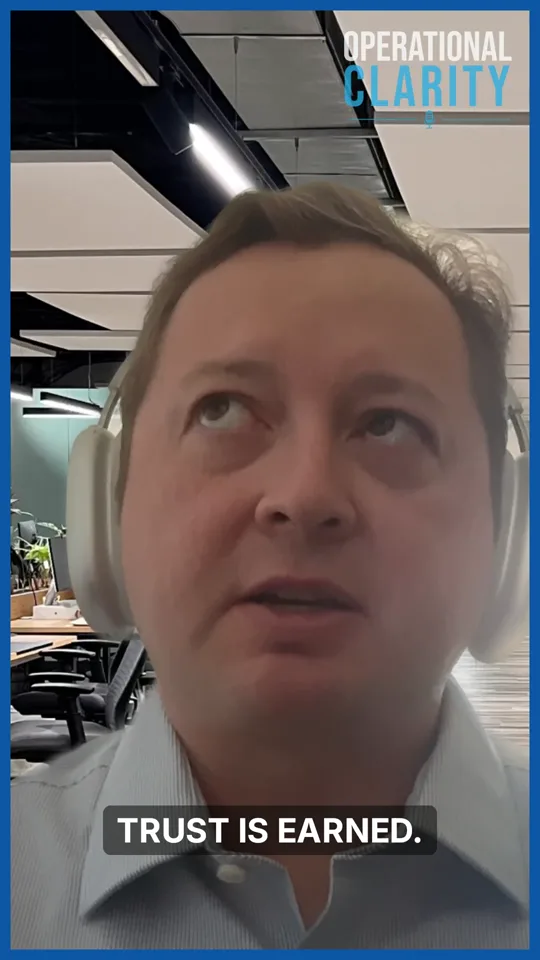
Nathan’s conclusion is that a system has to earn trust, as a person does. An AI answer should cite where it comes from and say why it believes the answer is true. The product team also has to test that the answers are correct and useful.
He was just as direct about AI hype, which in his view only creates skepticism. One manager asked him how AI could ever handle an accident in a building, where a response is needed within minutes. Nathan did not claim that it could.
“I don’t think any technology in the history of the world has solved every problem.”
Nathan Creswell
For him, the useful question is which of a strata manager’s greatest pains can be solved today that could not be solved before.
What I Took From Nathan
Nathan’s outside view gave me a test that any team can run. Take one decision from six months ago, for example a contractor you chose, and time how long it takes to find out why you chose it. If the answer sits in one person’s inbox, the process depends on that person’s memory.
I also keep thinking about the manager with nine tools. He was right to ask who trains the staff. Before you add a tenth tool, check that your people can see where its answers come from.
Where Does Operational Noise Cost Your Team the Most?
If your team answers repeat questions by email and keeps old decisions in someone’s inbox, you know the noise Nathan describes. A good first step is to see which part of that work AI can take over.
The free AI Readiness Check asks a few short questions about how your team works today. You get your readiness level, three next steps and a 30/60/90-day plan by email.
It takes less than 60 seconds.
Nathan Creswell is the founder of Strata IQ. Facts and figures are as Nathan stated them at the time of recording.

Nathan Creswell
Founder, Strata IQ
Nathan Creswell is the founder of Strata IQ, an AI-native platform that helps strata communities make better decisions.
strataiq.app- Background
- Product development at Salesforce, Zuora and LeadIQ
- Market
- Strata in Australia
- Perspective
- Apartment owner in Sydney
More episodes

Your team could be the next result.
Book 30 minutes. Walk me through the workflow that eats the most time. We'll map it together, and you keep the sketch, whether we work together or not.
Tell me a little about your team.
Not ready to talk? Get your free AI readiness report →